


Before the accident: cover, car and road
What is worth settling before a crash rather than after it — the cover you actually bought, the condition of the car, and the driving that decides whether the crash happens at all.
Every other guide in this section starts at the moment of impact. Almost nothing that decides how the claim ends starts there. The cover was chosen months earlier, the tyres wore down over a year, and the gap to the car in front was set two seconds before anyone touched a brake.
These pieces work backwards from the crash to the decisions that shaped it. Where a rule exists for your state or country it is shown and cited at the end of each one, with a note on what insurers are already doing with the data your car and your phone produce.
Guides
Ready — the cover and the paperwork
The claim you may one day file is largely decided the day you buy the policy. What each coverage pays for after a real crash, what the legal minimum leaves uncovered, and how to read your own declarations page before you need it.
-

How much car insurance do you need? Read the page that says what you bought
The legal minimum is a floor, not a recommendation. What each coverage actually pays for after a real crash, and how to read your own declarations page before you need it.
-

What each car insurance coverage actually pays for after a crash
Collision, comprehensive, liability, uninsured motorist, gap, rental and medical cover put against the same questions: whose loss, which deductible, whose ceiling — and which losses fall between them and are paid by nobody.
-

How to read your car insurance policy: the six parts and what each one does
The document that decides your claim is not the one you were sold. What the insuring agreement, the definitions, the exclusions, the conditions and the endorsements each do — and the four clauses to find in your own contract tonight.
-

Choosing an insurer by how it handles claims, not by what it charges
A quote prices the year in which nothing happens. The published record of how a company behaves once a claim is open exists, in pieces, under names no buyer recognises — and here is how to read it.
-

Choosing a broker: who pays them, and what the law makes them owe you
Whether the person selling you a motor policy is friendly is not the question. Who pays them is, and so is what the law then requires them to disclose — and the questions that reveal whether they will still be there when a claim is open.
-
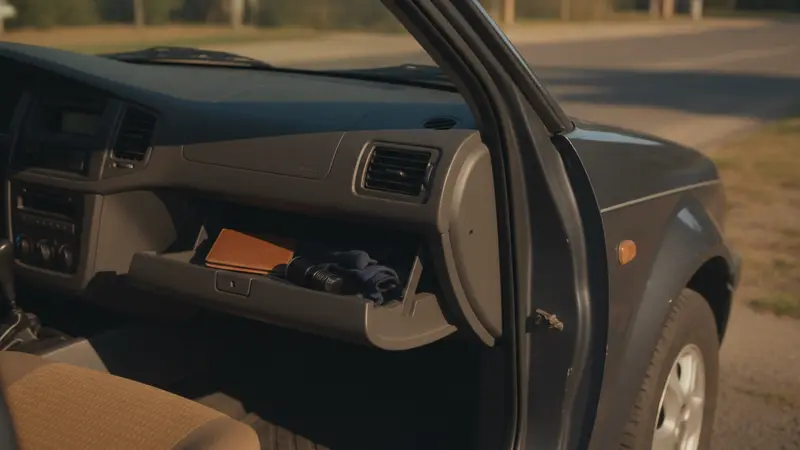
What to keep in the glovebox and on your phone
The documents, the numbers and the dated photographs a claim will ask for, assembled while you are calm — walked through one roadside moment at a time, item by item.
-

The life you described when you bought the policy, and the one you are living now
A motor policy is priced against a description of a life — who drives, where the car sleeps, what it is used for. The description ages. What the contract asked you to tell it, and what happens to a claim when you did not.
-

The fleet file, read folder by folder before anyone needs it
After a crash the questions arrive in a fixed order, and each one is a folder that either exists already or does not. The commercial policy, the cars the business does not own, the driver file and the maintenance record, read the way a claim will read them.
Prepared — the car and the driver
Not a service manual. The small number of checks a driver can do without tools, what a warning sign means on the day it appears, and the routine a company runs over a fleet.
-

Brakes, tyres, lights: the checks that change the odds
Not a service manual. What a soft pedal or a worn tyre actually does to a crash, when each defect announces itself, and the check that takes two minutes before a long drive.
-
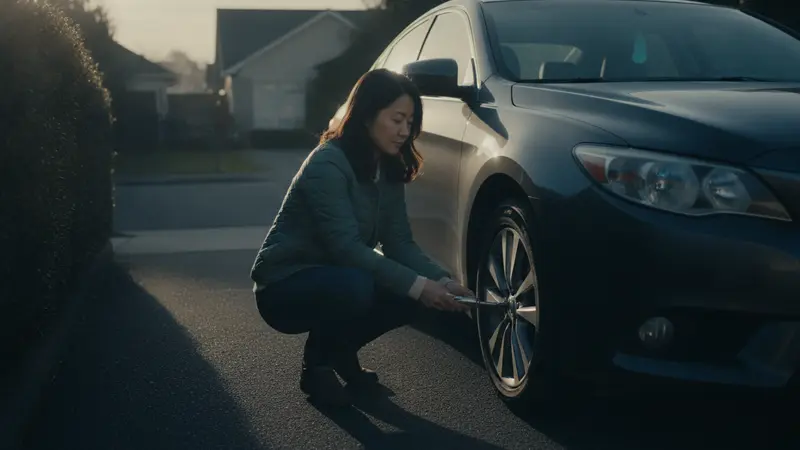
What the sidewall is actually telling you
Load index, speed symbol, tread-wear indicators, the four-digit date code, M+S and the alpine mark — each defined by the instrument that created it, and then used to read your own tyre.
-
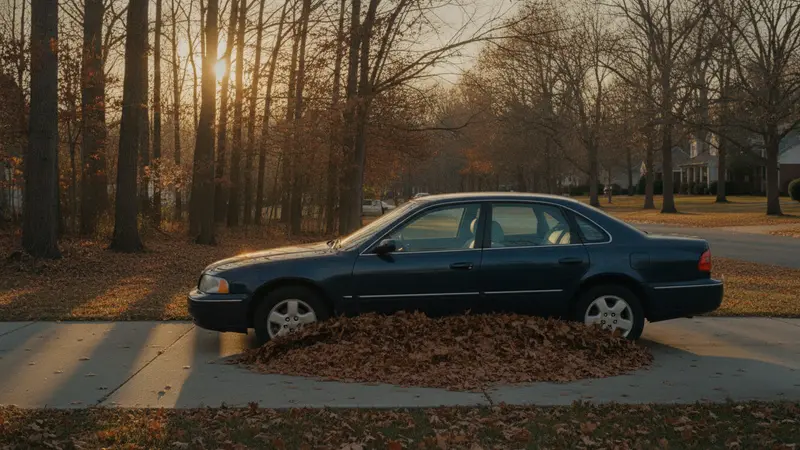
What each season asks of the car
Cold before snow, snow before the restriction, heat before the storms. The year in the order a car meets it, and why every part of the answer has to be bought out of season.
-

Fit to drive: eyesight, medication and the hours you slept
Licensing authorities define what a driver's eyes must do, and medicines regulators define which pills carry a warning. Nobody measures the third thing, and it is the one most likely to be wrong tonight.
-

Driver assistance: what the test proves, and what it leaves out
Automatic braking, lane keeping, adaptive cruise and blind-spot monitoring put against the same four questions — what each is specified to detect, what the published test measures, what the maker says degrades it, and what is still yours to do.
-
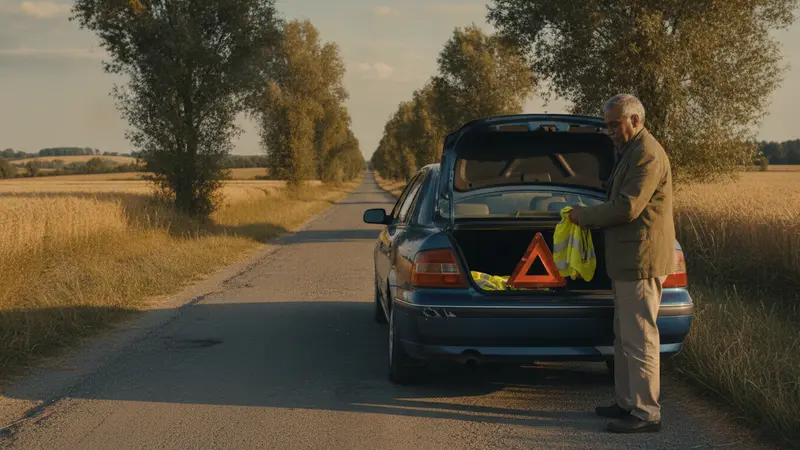
When the car stops: the kit, and the order to use it in
One ordinary breakdown walked through in order — where you stop, what goes out behind you, when to get out and when not to, and which object each step turns out to need.
-

The defect report, read field by field
The daily inspection report is the only fleet document written by the person who actually looked at the vehicle. What each field is for, who signs it, how long it lives, and why an open defect with no closing line is the worst page in the file.
Avoid — on the road
Defensive driving written for adults who already drive: speed, distance, weather, and the moments when the car stops doing what you asked it to do.
-

Driving in heavy rain: what actually changes, and in what order
Grip, stopping distance, following distance, lights, standing water and the slide. One wet journey walked through from the first drops, and the two decisions that do most of the work.
-
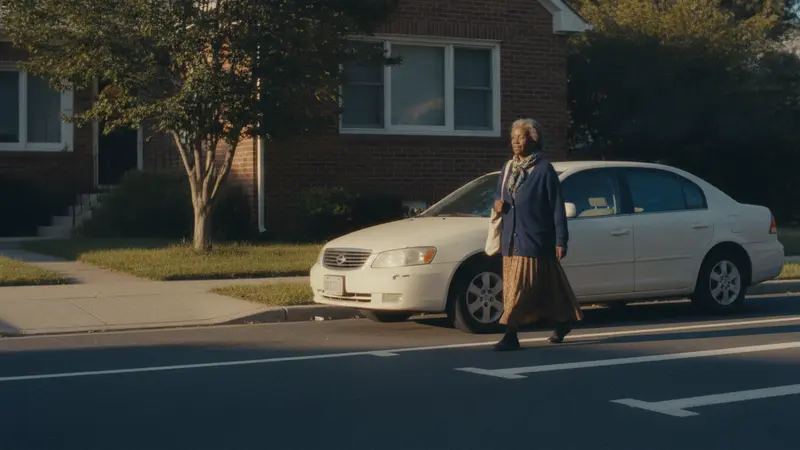
How much space, and how fast, on a street where people walk
Two questions with published answers and no single answer: the seconds of gap four road authorities each state differently, and the speed at which a person in front of the car stops being a near miss.
-

Night driving and the headlights coming the other way
One ordinary night drive walked through in order — the lit town, the unlit road, the car that dips, the car that does not, the cyclist — with every instruction quoted from a road authority.
-

Going up and coming down: a hill in the words the instruments use
Gradient, engine braking, the gear a descent is taken in, brake fade, the arrester bed, the hill hold and the trailer's own brakes — each defined by the code, the manual or the design standard that created it, and then used to read your own hill.
-

Overtaking: when to go, when to abort, and how to come back
The one everyday manoeuvre that is legal here, prohibited a hundred metres later, and left to your judgment in between. Ranged from the clear end to the forbidden one, with the arithmetic of the middle and a verdict that is not hidden in it.
-

Intersections: who has priority, what the signal obliges, and what a glance costs
Four junction types put to the same four questions — which instrument grants priority, what it actually obliges, which collision the geometry produces, and what a moment of distraction costs at each one.
-

Sharing the road with pedestrians and cyclists: the rules, read in order
The Highway Code's hierarchy rules H1, H2 and H3, read as the Code prints them, with Spain's traffic regulation and two US states' statutes brought alongside wherever they answer the same question differently.
-

Tyre blowout, brake failure and the car that stops ahead: what the sources actually say
Three failures about which the internet is extremely confident. We searched the road authorities, the driver handbooks and one manufacturer's own manual for the instructions everybody repeats — and this is what was there, what was not, and who published the difference.
Tools
Free, no sign-up. Everything runs in your browser.

Crash simulator
Rebuild your accident in 3D, watch the replay, and get the numbers, diagram and narrative a claim needs — pedestrians and cyclists included.

Am I covered?
A questionnaire you answer with your declarations page in front of you. It compares your liability limits with the compulsory minimum where you are, and turns the rest into a list of questions for your insurer or broker. Nothing you type leaves your browser.

Claim readiness checklist
A working checklist for a car insurance claim — for a driver or for a company running vehicles, and in two before-the-trip modes: the two-minute walk-around with the glovebox and phone kit, and a fleet’s daily defect report. Each item says why it matters. Your ticks stay in your browser and the list prints.

Claim deadline calculator
Pick where the accident happened and the date it happened, and read the deadlines to go to court and the insurer’s own response periods as dates, each cited to the instrument it comes from.

Total loss estimator
Test a repair estimate against a total-loss threshold you choose yourself, and see the payout arithmetic laid out, including the version where you keep the wreck. Every figure is an illustration of what you typed.

Do I need a lawyer?
Six questions about your claim, and a straight answer about whether legal advice is likely to change the outcome. No referrals, no panel of firms, nothing to sell.
Car insurance claim rules by state and country
Fault system, deadlines to claim and to sue, insurer response times, minimum liability coverage and the regulator to complain to — one page per jurisdiction, every rule cited.
AlabamaAlaskaAlbertaArgentinaArizonaBritish ColumbiaCaliforniaChileColombiaColoradoConnecticutDelaware Rules by state & country →
This guide explains how car insurance claims generally work. It is not legal advice, does not create a lawyer–client relationship, and is not a statement of any insurer's or regulator's position. Rules change and differ by jurisdiction; check the cited instrument and, where money or injury is at stake, consult a licensed professional in your jurisdiction.